
Your clinic is growing.
Good news, right?
Until the front desk is handling three calls at once, yesterday’s follow-ups are still pending, someone needs help with a billing question, and your clinic manager is doing work that was never supposed to be part of their job.
Then comes the obvious thought:
“Maybe we need to hire more people.”
Sometimes you do.
But sometimes, adding another full-time person to an already messy process simply gives the mess one more person to involve.
That is why healthcare operations are changing.
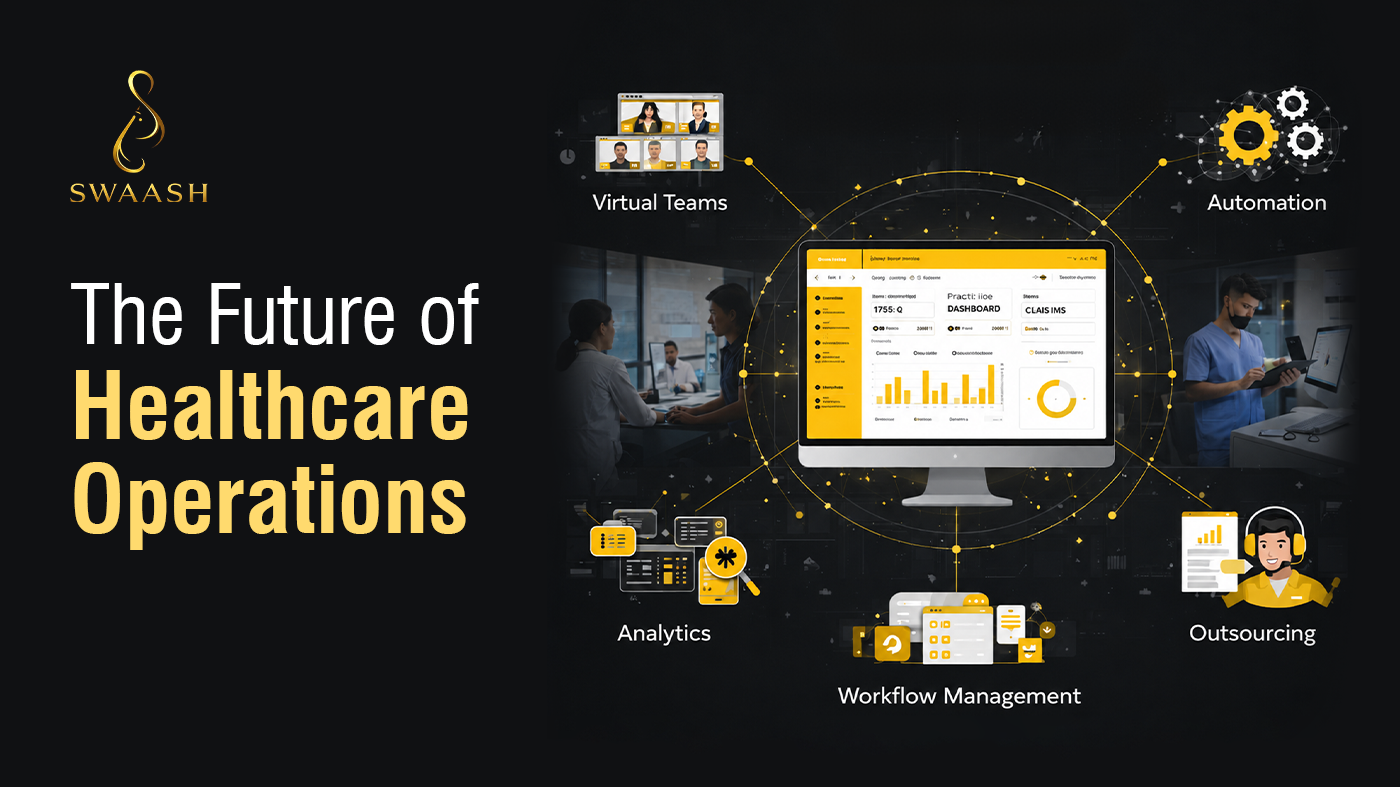
More businesses are now combining virtual teams, automation, and healthcare outsourcing solutions instead of expecting every task to sit with an in-house employee.
And this is not just a cost decision.
For many growing clinics, medspas, telehealth companies, and healthcare businesses, it is becoming a capacity decision.
The Old Way of Running Everything In-House Is Getting Harder
There was a time when growth followed a fairly predictable pattern.
More patients meant more staff.
More locations meant larger administrative teams.
More work meant more hiring.
That model still works in some situations. But it can become expensive and difficult to manage.
Think about how many non-clinical tasks happen before and after one appointment:
- scheduling
- reminders
- intake coordination
- follow-ups
- inbox management
- data entry
- internal updates
Now multiply that by a growing patient base.
The workload increases quietly.
Most owners do not notice the problem at first because the team somehow keeps absorbing it.
People stay late.
Managers jump in.
Someone handles follow-ups between other tasks.
It works, until one busy week exposes everything.
Virtual Teams Are Changing What “Staffing” Looks Like
Here is a question worth asking:
Does every administrative task really need someone sitting inside your clinic?
Probably not.
This is where healthcare virtual assistant services are becoming useful for growing businesses.
A virtual support team may help with routine non-clinical work such as:
- appointment coordination
- inbox support
- follow-up workflows
- administrative updates
- recurring backend tasks
The value is not simply having “extra hands.”
It is giving work a proper owner.
Because this is what happens in many clinics: a task belongs to everyone, which usually means nobody handles it consistently.
A virtual team can create structure around work that keeps falling between roles.
The Best Use of Automation Is Usually Boring
And that is actually a good thing.
Healthcare businesses do not need flashy technology for the sake of looking modern.
They need fewer repetitive tasks.
A patient should not miss a reminder because someone got busy.
A routine follow-up should not depend on a sticky note.
The same information should not need to be typed into multiple places without a reason.
These are practical benefits of healthcare automation.
The wins often come from very ordinary things:
- automatic reminders
- digital intake workflows
- recurring notifications
- task routing
- standard follow-up sequences
Nothing futuristic.
Just fewer things for people to remember manually.
There Is Real Money Tied Up In Administrative Inefficiency
This is not a small operational issue.
According to the 2024 CAQH Index, routine administrative tasks in the U.S. healthcare system carried an estimated annual cost of about $90 billion. The same research identified roughly $20 billion in potential savings through greater adoption of electronic and automated workflows.
That number matters because it puts a real cost on something healthcare teams already feel every day.
Manual work adds up.
One repeated task may look harmless.
Thousands of repeated tasks are an operating problem.
This is one reason the conversation around healthcare outsourcing solutions and automation has become much more serious.
Outsourcing Is Not The Same As Handing Over Your Business
A lot of owners still hear “outsourcing” and imagine losing visibility.
That is a fair concern.
Poorly managed outsourcing can create more confusion, not less.
But good outsourcing is not about sending random work somewhere else.
It is about deciding:
What must stay close to the internal team?
What can be standardized?
What can be supported remotely?
What should be automated completely?
That distinction matters.
A clinic may keep sensitive, judgment-heavy work with its internal team while using healthcare admin support services for clearly defined backend processes.
The goal is not less control.
The goal is less operational clutter.
What This New Model Actually Looks Like
| Old Operational Model | More Scalable Model |
| Every task handled in-house | Work assigned by actual need |
| Staff manually chase reminders | Routine reminders are automated |
| Managers absorb admin overflow | Defined support handles recurring tasks |
| Hiring happens whenever workload rises | Capacity is reviewed before hiring |
| Processes depend on memory | Workflows are documented |
| Growth adds pressure | Systems absorb more volume |
The shift is pretty simple.
Do not use a highly skilled person for work that a system, process, or dedicated support function can handle better.
The Smartest Clinics Are Mixing All Three
Virtual teams alone are not the answer.
Automation alone is not the answer.
Outsourcing everything is definitely not the answer.
The stronger model is usually a mix.
For example, an automated system may send a reminder.
A virtual support professional may handle a response that needs follow-up.
The internal team may step in when the situation requires clinical knowledge or judgment.
That is a much better use of everyone’s time.
And honestly, this is where operations start feeling less chaotic.
Not because there is less work.
Because the work is going to the right place.
Healthcare Admin Support Is Becoming More Specialized
Generic admin help is not always enough in healthcare.
The environment is different.
The workflows are different.
The expectations around privacy, accuracy, escalation, and patient communication are different.
That is why businesses looking at healthcare admin support services need to think beyond basic task delegation.
The real questions are:
Can the support function follow a defined workflow?
Does everyone know when to escalate?
Are responsibilities clear?
Can performance actually be tracked?
If those answers are vague, adding more support may not solve much.
One Mistake: Automating A Bad Process
This happens all the time.
A business has a messy workflow.
So it buys software.
Now the messy workflow happens faster.
Before introducing automation, map what is actually happening.
Where does the task begin?
Who owns it?
Where does it get delayed?
Which part genuinely needs a human?
You may discover that the problem was never the tool.
It was the process.
The benefits of healthcare automation become much clearer when the workflow itself makes sense first.
Another Mistake: Outsourcing Only After Everyone Is Burned Out
Many businesses wait too long.
They consider outside support only when:
- the team is overwhelmed
- response times are slipping
- managers are buried in admin
- hiring feels urgent
By then, every decision feels rushed.
A better time to explore healthcare outsourcing solutions is when repeated pressure starts becoming visible, not when the operation is already in crisis.
Watch for the small signs.
The same task keeps getting delayed.
One person becomes the default fixer.
Managers spend more time coordinating than managing.
Those are capacity warnings.
So, What Should Stay Human?
A lot.
That is the point people miss.
Healthcare still depends on trust, judgment, empathy, and real human interaction.
Automation should not flatten every patient conversation into a sequence.
Virtual teams should not be given vague responsibilities without boundaries.
Outsourcing should not remove accountability.
The future is not “fewer humans everywhere.”
It is better use of human time.
That may be the most important shift of all.
The Healthcare Businesses That Scale Will Build Differently
The next generation of healthcare businesses will probably look normal from the outside.
Patients will still book.
Teams will still communicate.
Care will still depend on people.
But behind the scenes, the operating model will be different.
Routine work will be automated where it makes sense.
Virtual teams will support defined functions.
Internal staff will spend less time absorbing random administrative overflow.
And healthcare virtual assistant services will increasingly sit alongside in-house teams rather than being treated as an emergency fix.
That is what scalable operations can look like.
Not one giant transformation.
Just better decisions about who does what, where the work happens, and which tasks should still require manual effort.
If your healthcare business is growing but the backend keeps getting heavier, adding more people may not be the only answer.
Schedule a call with our experts at Swaash to explore smarter healthcare outsourcing solutions, strengthen administrative workflows, and build an operating model that can support growth without constantly stretching your internal team.
FAQs
We already have an admin team. Why would we need virtual support too?
Because a good internal team can still be overloaded. Virtual support can take ownership of recurring work that keeps pulling your core staff away from higher-priority tasks.
What kind of work can healthcare virtual assistant services actually handle?
It depends on the business, but routine scheduling support, follow-up coordination, inbox work, and defined backend tasks are common starting points.
Is outsourcing cheaper than hiring more people?
Sometimes, but cost should not be the only question. The bigger issue is whether you need a full new role or simply better support for specific work.
What are the real benefits of healthcare automation for a smaller clinic?
Mostly fewer repetitive tasks and fewer things depending on memory. For a small team, even that can change the day quite a bit.
How do we know if healthcare admin support services are actually needed?
Look at your managers. If they spend half their day chasing updates, fixing routine gaps, or covering admin overflow, that is usually a pretty clear sign.