
Table of Contents
“If only there were more hours in the day.”
Most clinic owners have probably said that at least once.
The day starts with appointments and somehow ends with reminder calls, paperwork, scheduling changes, follow-ups, billing questions, and twenty other things nobody planned for.
The strange part?
The clinic can be packed with patients and still feel like nothing is running smoothly.
Everyone is working.
Everyone is busy.
But everyone is tired.
At some point, you stop asking how to grow and start asking how to simply keep up.
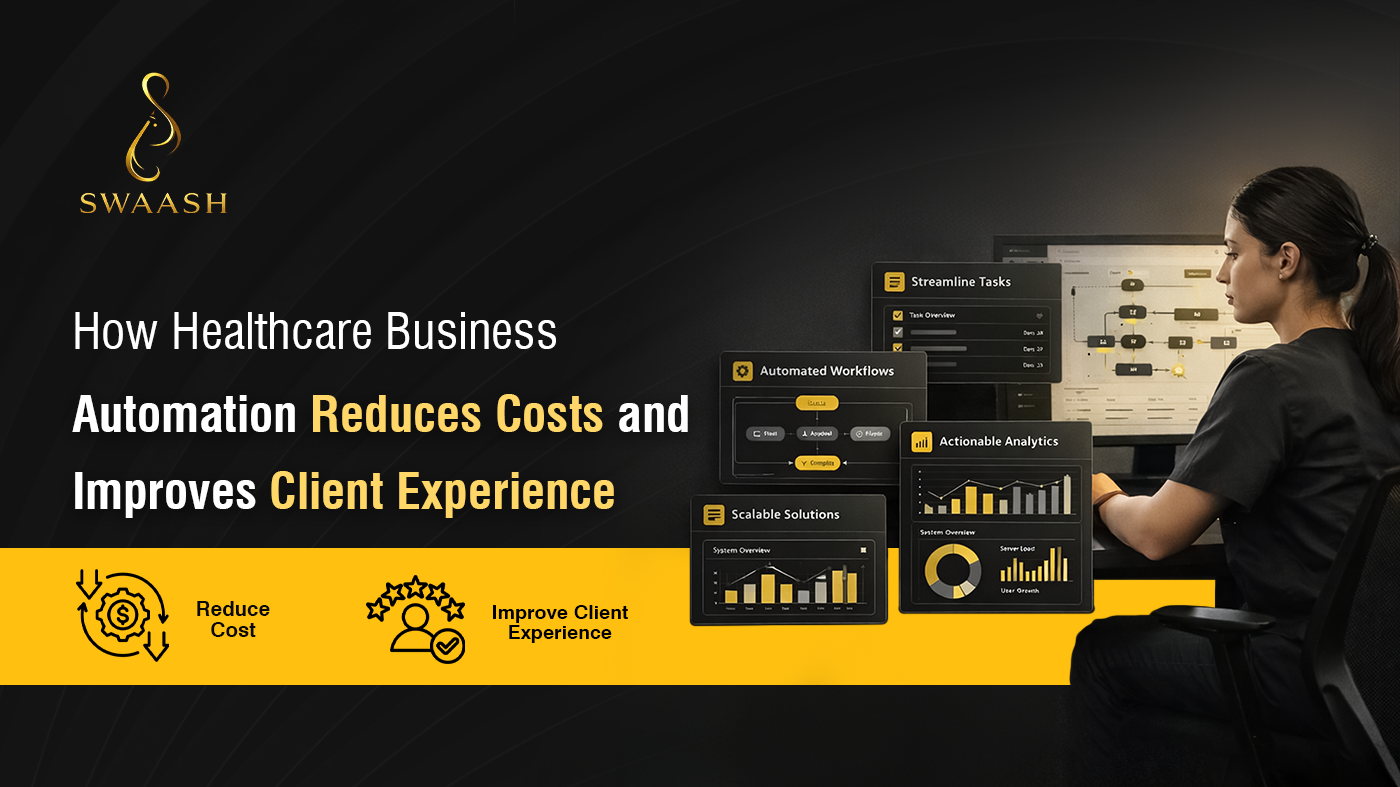
That is usually when people start looking at healthcare business automation.
Not because they want robots running the clinic.
Because they want their team to stop wasting time on work that should have been simplified years ago.
The Real Problem Usually Hides Behind The Reception Desk
Walk into almost any growing clinic and watch for ten minutes.
Someone is answering a phone call.
Someone else is trying to confirm tomorrow’s appointments.
A patient needs to reschedule.
Another patient wants lab reports.
Meanwhile, somebody forgot to send yesterday’s follow-up message.
None of these jobs are difficult.
The problem is that they never stop.
And little by little, they consume the day.
Most owners do not notice it because everyone stays busy.
Busy looks productive.
It is not always efficient.
Where The Money Quietly Disappears
People usually think unnecessary expenses come from rent or equipment.
Sometimes they come from time.
Five minutes spent manually confirming appointments.
Three minutes sending reminders.
Ten minutes searching for information already sitting somewhere in the system.
Multiply that across dozens of patients every day.
Suddenly the clinic is spending hours on tasks that add very little value.
That is where healthcare workflow automation starts making sense.
Not because technology is exciting.
Because repetitive work is expensive.
According To McKinsey
According to McKinsey & Company, automation can significantly reduce time spent on repetitive administrative work, allowing employees to focus on higher-value activities.
Healthcare teams feel that impact quickly because administrative work often takes up a surprising portion of the day.
The Clinics That Feel Calm Usually Have Better Systems
Have you ever walked into one clinic that feels completely chaotic and another that feels calm even though both are equally busy?
That difference is rarely luck.
Usually, one clinic has:
- automated reminders
- organized scheduling
- structured follow-ups
- standardized communication
The other relies on memory.
And memory is not a scalable system.
Patients Notice More Than We Think
People may never ask what software a clinic uses.
But they absolutely notice when:
- confirmations arrive on time
- booking feels easy
- follow-ups happen without chasing
- communication feels organized
That experience builds trust.
And trust keeps people coming back.
This is why healthcare business automation improves more than efficiency.
It improves perception.
This is probably the biggest misconception.
Good automation removes repetitive work.
It does not remove human connection.
Instead of spending the morning making reminder calls, your staff can actually spend time answering patient questions properly.
That creates a better experience for everyone.
Technology Alone Is Not Enough
Some clinics buy expensive software expecting miracles.
Then six months later, nothing changes.
Why?
Because technology cannot fix messy workflows.
It simply automates them.
That is why many growing organizations combine automation with healthcare operations outsourcing and process improvement.
Fix the workflow first.
Then automate it.
The results are usually much better.
One Small Change Often Creates A Bigger Ripple
Nobody needs to automate everything overnight.
Start with reminders.
Then scheduling.
Then follow-ups.
Small operational improvements add up surprisingly fast.
The team feels less rushed.
Patients get better communication.
Owners spend less time solving the same problems every day.
That is usually where growth starts feeling manageable again.
Instead of trying to do everything manually, many healthcare businesses are now using healthcare business automation, smarter healthcare workflow automation, and strategic healthcare operations outsourcing to build clinics that grow without becoming harder to manage.
Schedule a call with our experts at Swaash and discover where simple operational changes can save time, reduce costs, and create a smoother experience for both your team and your patients.