
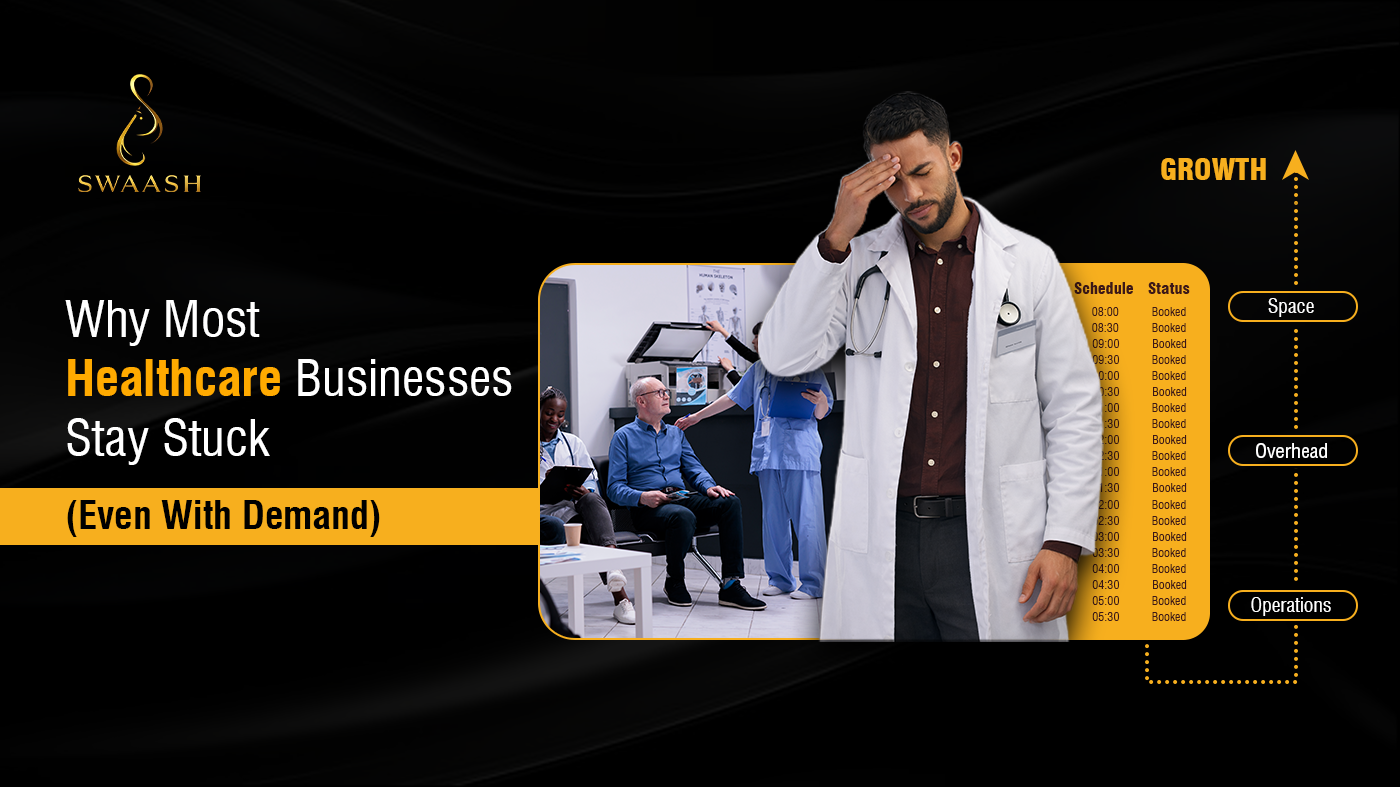
There is something frustrating that happens in healthcare businesses all the time.
Patients are coming in.
The demand is there.
The market opportunity is obvious.
Yet somehow, growth feels slower than it should.
The clinic stays busy.
The team stays busy.
The owner stays busy.
But the business itself does not seem to move forward.
If that sounds familiar, you are not alone.
A lot of healthcare businesses are not struggling because of a lack of demand.
They are struggling because growth and scalability are two completely different things.
And honestly, this is where many founders get trapped.
The Strange Reality of Healthcare Growth
Ask most clinic owners what they need.
Many will immediately say:
- more patients
- more marketing
- more visibility
But when you look closer, those things are often not the real problem.
The waiting room is not empty.
The phone is not silent.
Patients are already showing interest.
The issue is what happens after that.
Because demand alone does not create growth.
Systems do.
Being Busy Can Be Misleading
This is probably one of the biggest traps in healthcare.
Everyone is working.
The front desk is occupied.
The doctors are occupied.
The operations team is occupied.
From the outside, it looks like success.
But inside the business, things often feel chaotic.
Appointments are being managed manually.
Follow-ups are inconsistent.
Staff are constantly multitasking.
The owner is involved in every major decision.
And honestly, that is not growth.
That is maintenance.
A business can stay busy for years without truly scaling.
The Founder Becomes The Bottleneck
This happens more often than people realize.
In the early days, being involved in everything makes sense.
You know the patients.
You know the operations.
You know the team.
But eventually, the business reaches a point where everything still depends on you.
Every problem comes to you.
Every important decision comes to you.
Every escalation comes to you.
At first, that feels like control.
Later, it becomes a limitation.
Because a business cannot grow much larger than its bottleneck.
And sometimes the bottleneck is the founder.
Most Healthcare Businesses Have A Systems Problem
Not a demand problem.
Not a marketing problem.
A systems problem.
You can usually spot it quickly.
The business relies heavily on memory.
Processes are different depending on who handles them.
Patient experiences vary from one staff member to another.
Nothing is truly documented.
And when one key employee leaves, everything becomes harder.
This is where many healthcare growth challenges begin.
Because growth adds pressure to weak systems.
It does not fix them.
What Weak Systems Actually Cost
A lot more than people think.
Not just financially.
Operationally too.
Things start slipping through the cracks:
- missed follow ups
- scheduling mistakes
- slower response times
- inconsistent patient experiences
None of these seem major individually.
Together, they quietly slow down growth.
And honestly, most businesses do not notice the impact until it becomes impossible to ignore.
According To Forbes…
According to Forbes, businesses that create stronger customer experiences and more consistent interactions are more likely to build loyalty and long-term retention.
That applies directly to healthcare.
Patients remember how a clinic made them feel.
Not just the treatment they received.
And delivering consistent experiences becomes difficult when operations rely entirely on manual effort.
The Clinics That Scale Usually Look Different
What is interesting is that scalable healthcare businesses often do not look dramatically different from the outside.
The difference is behind the scenes.
They have:
- clearer workflows
- defined responsibilities
- documented processes
- structured communication
The team spends less time reacting and more time executing.
That creates operational breathing room.
And that breathing room creates growth capacity.
This is one reason successful founders focus heavily on scaling healthcare business operations before chasing more demand.
Growth Usually Breaks What Is Already Weak
This is something many businesses learn the hard way.
Growth sounds exciting.
Until it arrives.
Then suddenly:
- more appointments create scheduling pressure
- more patients create communication gaps
- more staff create coordination challenges
The very things that seemed manageable before become stressful.
Growth exposes weaknesses.
It magnifies them.
Which is why businesses that prepare operationally tend to scale much more smoothly.
Trying To Solve Everything With Marketing
This is another common mistake.
The business feels stuck.
So the response is:
- run more ads
- post more content
- increase marketing spend
Marketing can absolutely create demand.
But demand alone does not solve operational problems.
In some cases, it actually makes them worse.
Because now, the business has more leads flowing into systems that are already struggling.
That is why many growing organizations eventually explore healthcare consulting services.
Not because they need more ideas.
Because they need better structure.
What Starts Changing When Systems Improve
The shift is usually not dramatic.
It happens gradually.
Communication becomes smoother.
Staff stop relying on memory.
Patients receive more consistent experiences.
Owners spend less time solving the same problems repeatedly.
And honestly, the business starts feeling lighter.
Not easier.
Just more manageable.
That difference matters.
Because sustainable growth should not feel like constant firefighting.
The Real Goal Isn’t More Demand
Most healthcare businesses already have some level of demand.
The real challenge is creating an organization capable of handling more demand without creating more chaos.
That requires:
- stronger processes
- clearer accountability
- operational consistency
- better workflows
Those things may not feel as exciting as marketing campaigns.
But they are often the difference between staying busy and actually growing.
Where Growth Starts Looking Different
The healthcare businesses that move forward are not always the smartest.
They are not always the biggest, either.
Usually, they are the ones that stop relying on effort alone.
They build systems.
They create structure.
They remove friction from everyday operations.
And over time, that allows them to grow without everything becoming harder.
If your organization is facing healthcare growth challenges and finding it difficult to make progress despite strong demand, it may be time to look beyond marketing and focus on operational readiness.
Schedule a call with our experts at Swaash to identify growth bottlenecks, strengthen internal systems, and create a more scalable path forward.
FAQs
We have demand, so why does growth still feel slow?
Because demand is only one part of the equation. If systems and operations cannot support growth, progress starts feeling much harder than it should.
What usually prevents healthcare businesses from scaling?
In many cases, it is inconsistent processes, operational bottlenecks, and too much dependency on a few key people.
Is marketing enough to solve healthcare growth challenges?
Not always. Marketing creates opportunities, but operational systems determine whether those opportunities turn into sustainable growth.
When should a healthcare business focus on scaling?
Usually before things start feeling chaotic. Building structure early makes growth much easier to manage later.
How can healthcare consulting services help?
They help identify inefficiencies, operational gaps, and growth barriers that are often difficult to see from inside the business.