
Table of Contents
If you’ve spent even a few days inside a growing clinic, you’ve probably seen this happen.
The receptionist is answering a call.
A patient is waiting at the front desk.
Someone needs to reschedule an appointment.
Another patient is asking for a report.
Meanwhile, the doctor is asking whether yesterday’s follow-ups were completed.
Nobody is sitting idle.
Yet somehow everyone feels behind.
This is the part many clinic owners struggle to understand.
The team is working hard. The clinic is busy. But the day still feels chaotic.
And honestly, that chaos usually has very little to do with patient volume.
Most of the time, it comes from how the work is being managed.
The Problem Is Not Always More Patients
A lot of clinic owners assume efficiency problems start when patient numbers increase.
Not necessarily.
Sometimes the real issue is that the clinic is running the same way it did when it had half the number of patients.
The team is still:
- manually confirming appointments
- manually following up
- manually updating records
- manually coordinating schedules
For a while, everyone adjusts.
Then, one day, it feels like the team spends more time managing tasks than helping patients.
That is usually the moment owners start looking at automation in healthcare differently.
According to the American Medical Association, administrative burden remains one of the major contributors to inefficiency and burnout across healthcare settings. While patient care is the priority, a significant amount of time is often spent on documentation, scheduling, and other operational tasks.
Nobody Opens A Clinic To Spend Hours On Admin Work
Think about it.
Nobody starts a healthcare business because they enjoy sending appointment reminders.
Nobody hires talented staff because they want them chasing paperwork all day.
But that is exactly what happens in many clinics.
Hours disappear into:
- reminder calls
- repetitive messages
- scheduling changes
- status updates
Individually, these tasks seem small.
Together, they consume a surprising amount of time.
Most people do not notice it at first because the work gets spread across the day.
But it adds up.
Fast.
The Clinics Getting Ahead Are Not Always Bigger
This is something interesting.
The most efficient clinics are not necessarily the ones with the biggest teams.
In many cases, they simply have fewer manual processes.
A clinic with ten staff members and strong systems can often operate more smoothly than a clinic with fifteen people constantly putting out fires.
That difference becomes obvious during busy periods.
One clinic feels organized.
The other feels overwhelmed.
Where Automation Is Actually Making A Difference
When people hear automation, they often imagine complicated software.
In reality, most clinics start much smaller.
Things like:
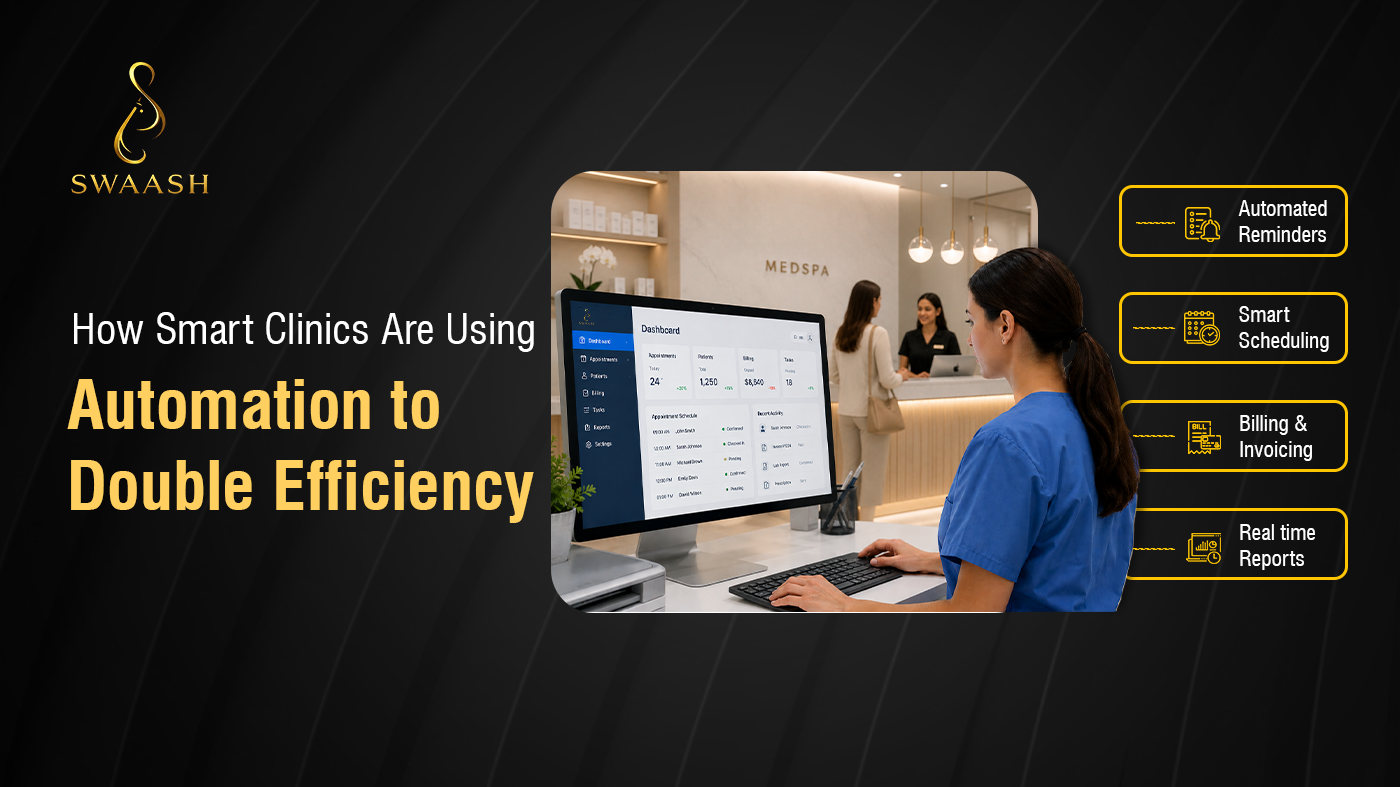
- automated appointment reminders
- online scheduling
- digital intake forms
- automated follow-up messages
Nothing dramatic.
But those small changes remove dozens of repetitive tasks every week.
And honestly, the team usually notices the difference immediately.
A Small Example
Imagine a clinic receiving dozens of appointment requests every day.
Without automation:
- someone answers every inquiry
- someone sends confirmations
- someone follows up
- someone manages reschedules
Now imagine most of that process happening automatically.
The workload does not disappear completely.
But the team suddenly has more time to focus on patients instead of administration.
That is where the real value comes from.
What Changes When Clinics Improve Efficiency
| Before | After |
| Constant phone calls | Automated reminders |
| Manual scheduling | Streamlined booking |
| Repetitive admin work | More patient-focused time |
| Frequent interruptions | Better workflow flow |
| Staff frustration | Better operational clarity |
Simple takeaway:
Good systems do not make teams work harder. They make work easier to manage.
Burnout Usually Starts With Small Things
A lot of healthcare teams do not burn out because of one major problem.
It is usually dozens of small frustrations repeated every day.
The same follow-up.
The same scheduling issue.
The same manual process.
Again and again.
Eventually, people become mentally exhausted.
This is one reason strong clinic efficiency systems matter so much.
Because efficiency is not only about productivity.
It is also about reducing unnecessary stress.
Technology Alone Is Not The Answer
This is where some clinics go wrong.
They buy software expecting it to solve everything.
Then nothing changes.
Why?
Because technology cannot fix a broken process.
If the workflow is messy, adding another tool usually creates more confusion.
The smartest clinics do something different.
They look at the workflow first.
Then they use healthcare tech solutions to support that workflow.
That order matters.
A lot.
The Hidden Benefit Nobody Talks About
Most discussions around automation focus on saving time.
That is important.
But there is another benefit.
Consistency.
Patients receive reminders consistently.
Follow-ups happen consistently.
Communication becomes more predictable.
And honestly, patients notice that.
People may never compliment your scheduling process directly.
But they definitely notice when everything feels smooth.
Growth Feels Different When Systems Improve
This is something clinic owners often say after making operational changes.
The clinic is still busy.
But it feels different.
Less reactive.
Less rushed.
Less dependent on people remembering everything.
The work keeps moving, but there is less friction behind the scenes.
That is usually the point where efficiency starts improving noticeably.
What Smart Clinics Understand
The goal is not to automate everything.
The goal is to automate the things that should never require so much attention in the first place.
Things like reminders, scheduling, repetitive communication, and routine administrative work.
When those tasks become easier, teams can focus on what actually matters.
Patient care.
Also, that is where better outcomes usually start.
If your clinic is exploring automation in healthcare, looking for stronger clinic efficiency systems, or evaluating practical healthcare tech solutions, it helps to start by identifying where your team is losing time every day.
Schedule a call with our experts at Swaash to uncover operational bottlenecks and build systems that help your clinic run more smoothly as it grows.
FAQs
We are already busy. How do we know if automation will actually help?
If your team spends a large part of the day on reminders, scheduling, or follow-ups, there is usually an opportunity to simplify those tasks.
Do smaller clinics benefit from automation too?
Honestly, yes. Smaller teams often feel the impact even more because every hour saved matters.
Will patients prefer automated communication?
Most patients simply want timely communication. As long as it feels clear and helpful, automation usually improves the experience.
What should clinics automate first?
Appointment reminders and scheduling are often the easiest places to start because the benefits are visible almost immediately.
Can automation reduce staff burnout?
It can help. Removing repetitive administrative work gives teams more time and mental space for higher-value tasks.