
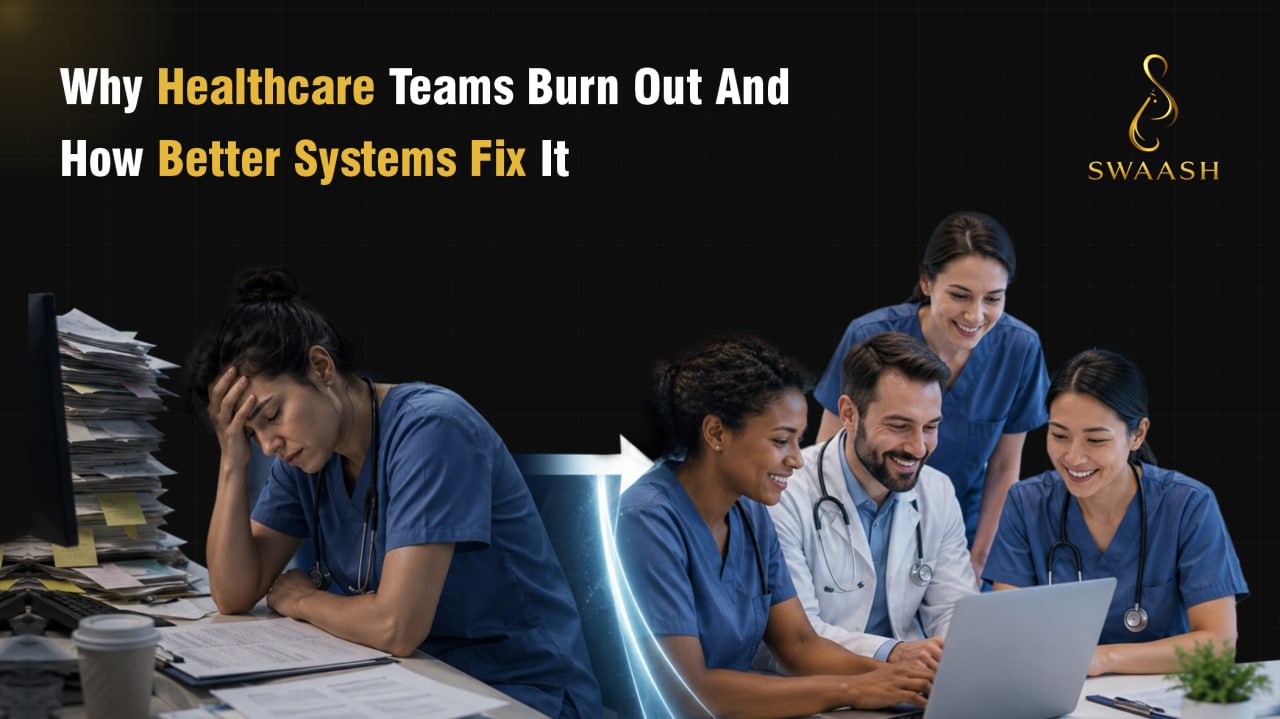
A lot of healthcare businesses think burnout happens because teams are “too busy.”
That is only part of the story.
Some teams handle high patient volume well. Others struggle even at a moderate capacity. Same industry. Similar workload. Completely different energy levels.
So what changes?
Usually, it comes down to systems.
Most people do not notice this at first because burnout builds quietly. It hides inside everyday routines. Constant follow ups. Repeated interruptions. Manual work that should have been simplified months ago.
Then eventually the team starts feeling exhausted all the time.
Not lazy. Not unwilling.
Just drained.
And this is exactly why operational structure matters more than many healthcare businesses realize.
What Is Healthcare Team Burnout?
Healthcare team burnout is ongoing physical and emotional exhaustion caused by prolonged workplace stress.
It often shows up through:
- low energy
- irritability
- reduced focus
- slower response times
- disengagement from work
According to the World Health Organization, burnout results from chronic workplace stress that has not been successfully managed.
Healthcare environments are especially vulnerable because teams deal with constant interaction, urgency, and multitasking every day.
Simple takeaway: burnout is rarely just a “people problem.” Very often, it is an operational problem.
Why Burnout Usually Starts Quietly
Most healthcare teams do not suddenly collapse under pressure.
It starts with smaller things.
Someone skips lunch because the schedule is full. A staff member stays back late to finish follow ups. Front desk coordination becomes messy, but everyone adjusts temporarily.
For a while, it seems manageable.
Then the stress becomes constant.
This is where things start changing.
Many businesses assume the issue is simply workload. But sometimes the bigger issue is how the work flows throughout the day.
That is why healthcare workflow optimization matters more than people think.
The Work Is Not Always Difficult. It Is Constant
This distinction matters.
A lot of healthcare staff are not overwhelmed because tasks are complicated. They are overwhelmed because interruptions never stop.
A normal day can look like this:
- answering patient calls
- fixing scheduling confusion
- handling follow ups
- coordinating internally
- responding to urgent requests
Everything feels urgent at once.
That creates mental fatigue quickly.
Simple takeaway: constant task switching drains energy faster than most businesses realize.
Most Teams Are Operating Reactively
This is more common than people admit.
The day starts with a plan. Then things shift constantly.
Patients arrive late. Communication gaps appear. Team members start multitasking to “save time.” Eventually everyone is reacting instead of working through a structured process.
Over time, this becomes normal.
But reactive operations create stress everywhere.
Strong healthcare team management is not just about supervising staff. It is about reducing unnecessary confusion before it reaches the team.
Too Much Manual Work Creates Invisible Pressure
A surprising amount of healthcare operations still depend heavily on manual effort.
Things like:
- appointment confirmations
- repeated patient reminders
- repetitive documentation
- follow up coordination
None of these tasks seem major individually.
But repeating them all day becomes mentally exhausting.
This is where healthcare workflow optimization starts making a real difference.
Not because automation sounds advanced.
Because reducing repetitive work gives people breathing room.
Better Systems Change How the Entire Day Feels
A lot of businesses think operational improvements need dramatic transformation.
Usually, they do not.
Small process changes often create the biggest relief.
For example:
- automated appointment reminders
- standardized patient communication
- centralized scheduling systems
- clearly assigned responsibilities
These changes reduce friction quietly.
And honestly, most teams notice the emotional difference before they notice the operational one.
Work starts feeling calmer.
Without Systems vs With Structured Systems
| Without Structured Systems | With Better Operational Systems |
| Constant interruptions | More predictable workflows |
| Repeated manual tasks | Automated routine processes |
| Staff confusion | Clear responsibilities |
| Reactive problem solving | Organized workflows |
| High mental fatigue | Smoother daily operations |
In simple terms: structure reduces pressure.
Many Businesses Try to Fix Burnout the Wrong Way
Usually, the first reaction is hiring more staff.
Sometimes that helps. Sometimes it makes things more complicated.
More people inside a messy system often creates:
- more communication gaps
- more coordination problems
- more inconsistency
This is why businesses should improve workflows before expanding teams aggressively.
That is one of the fastest ways to improve healthcare operational efficiency without creating additional chaos.
Patients Feel Operational Stress Too
Burnout does not stay internal.
Patients notice operational strain quickly.
Maybe responses become slower. Maybe follow ups are inconsistent. Maybe communication feels rushed.
Patients may never say “your team seems burned out,” but they absolutely notice the effects.
Operational efficiency directly shapes patient experience.
That connection matters more than many businesses expect.
Small Operational Fixes Often Create Big Results
A lot of healthcare businesses delay process improvements because they expect large complicated changes.
But many operational wins are surprisingly simple.
Common examples:
| Operational Problem | Practical Improvement |
| Missed follow ups | Automated reminders |
| Scheduling confusion | Centralized booking process |
| Repeated patient questions | Standardized communication |
| Team dependency | Defined workflows |
Most improvements start small.
Then they compound over time.
Why This Matters for Long Term Growth
Burned out teams struggle to support growth consistently.
Eventually:
- employee turnover increases
- patient experience weakens
- operational stability declines
This is why sustainable businesses focus heavily on systems.
Not because systems sound impressive.
Because healthy workflows create healthier teams.
And healthier teams support stronger growth.
That is the long-term value of healthcare workflow optimization and effective healthcare team management.
The Goal Is Not Perfection
This part matters.
You do not need perfect systems immediately.
You just need fewer points of friction than you have right now.
Sometimes businesses overcomplicate operational improvement. In reality, progress often looks quieter than expected.
Less stress.
Fewer interruptions.
More clarity.
That is usually the first sign things are improving.
A Better Way Forward
Most healthcare teams are already working hard enough.
Burnout usually happens because the system around them keeps demanding unnecessary effort.
That pressure builds slowly.
Then one day, exhaustion becomes part of the work culture.
Better systems change that.
Not overnight. But steadily.
If you want to improve healthcare team management and improve healthcare operational efficiency without overwhelming your staff, it helps to step back and identify where operational friction is actually happening.
Schedule a call with our experts at Swaash to simplify workflows, reduce operational stress, and build systems that support smoother healthcare operations.
FAQs
1. How do you know if your team is actually burned out or just temporarily stressed?
Temporary stress usually passes after a busy day or week. Burnout feels constant. Even normal tasks start feeling mentally exhausting.
2. We are growing fast right now. Is burnout basically unavoidable?
Not necessarily. Growth creates pressure, but messy systems create unnecessary pressure. There is a difference between being busy and being overwhelmed all the time.
3. Why do small operational problems end up affecting the whole team so much?
Because small inefficiencies repeat every single day. One extra task may seem minor, but repeated constantly, it drains energy faster than people expect.
4. Can healthcare workflow optimization help smaller clinics too?
Honestly, smaller clinics often feel the impact more. When teams are lean, even small workflow improvements make daily operations noticeably smoother.
5. What usually changes first when systems start improving?
Usually, the environment feels calmer before anything else. Teams stop reacting to everything constantly, and work starts feeling more manageable.